

This week in The Gallery Companion:
Why I’m looking back to art history rather than to the churn of the contemporary art world.
A load of links, videos, thoughts and images for your contemplation.
My three must-see exhibitions this month.
A reminder that my social media posting place of choice is Substack Notes. I share videos, images, exhibitions, and my thoughts on art on there most days. To follow me you’ll need to download the Substack app if you don’t already have it.
I came for the art, not the lecture
Lately I’ve noticed myself spending more and more time looking backwards rather than forwards, towards art history rather than the churn of the contemporary. Partly it’s because time has already done some of the hard work for us. Art history is a kind of long, slow editorial process: ideas have been tested, absorbed, rejected, argued over, sometimes revived. The art of the past I’ve been revisiting has inspired me because it does something compelling formally, emotionally and intellectually; it’s art that has already proved it can hold complexity, contradiction and depth.
By contrast, a lot of what currently circulates as ‘important’ contemporary art can feel strangely thin, over-explained and morally pre-labelled. The role of the curator in explaining art is something I’ve written about before. It’s not that I want none at all — some factual context is often useful for helping to understand what I’m looking at.

But what increasingly puts me off is the dominance of an overbearing curatorial voice — not only in determining which artists are seen, but in prescribing how their work should be understood. Too often, art is framed through a narrow interpretive lens, with politics sitting louder than practice. Artists are selected or interpreted in ways that reinforce a predetermined narrative, rather than opening up space for ambiguity, contradiction, or independent thought. Even exhibitions of historical art are not immune to this treatment.
Looking back at art history is a reminder that some of the most powerful work emerged from uncertainty, disagreement, and unresolved tension — not from perfect alignment with the dominant language or moral framework of the day. This doesn’t mean turning away from the present altogether. It means wanting the freedom to think, feel, and wrestle with what I’m seeing, rather than being told what to believe before I’ve even had time to look.
Nor is this a retreat into formalism. I’m as interested in ideas as I am in surfaces: in why certain ways of seeing emerge when they do, and what social, political, economic, or psychological pressures make particular forms feel necessary at a given moment. At its best, art offers evidence not just of individual expression, but of how people understood the world they were living in — and what they needed art to do for them. The passage of time allows these layers to be traced without collapsing them into a single, ‘correct’ moral reading.
In today’s art world — by which I mean its institutions, media, galleries, museums, curators, funding bodies, and leading personalities — ‘non-conforming’ perspectives are barely tolerated, let alone meaningfully supported. Complexity is flattened into easily legible positions, while certain aesthetics, ideas, and artists are repeatedly prioritised in alignment with prevailing ideologies. In a climate of cancellation, this inevitably leads to self-censorship; dissenting thoughts go unspoken.
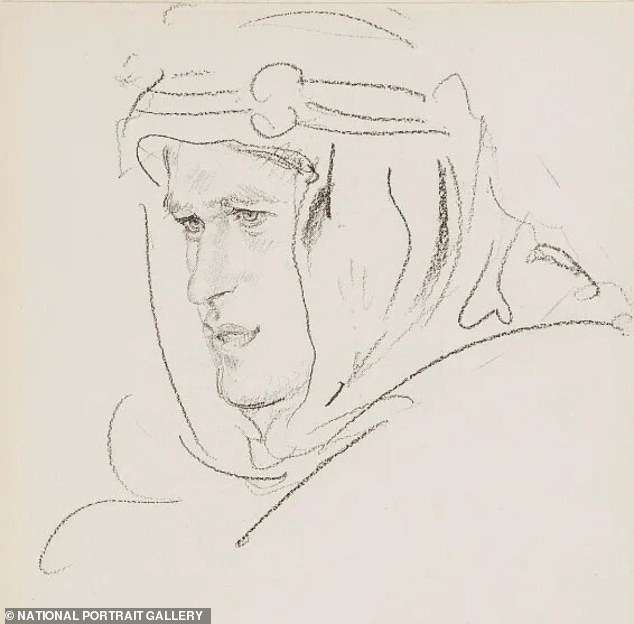
I’ve often quietly baulked at the language now used to discuss art, particularly in major museums and the art press, where viewers are increasingly instructed what to pay attention to and which responses are acceptable. The latest trigger warnings accompanying the early 20th-century portraits of Lawrence of Arabia at the National Portrait Gallery in London, in which he is depicted wearing local tribal headdress, are a classic example of this. Historical context is stripped away as contemporary arguments about cultural appropriation become the key takeaway.
This approach feels fundamentally at odds with what art is for. Art is, by its nature, about freedom — of expression, interpretation, and thought. The moment that freedom is curtailed, policed, or pre-approved, something vital is lost.
Other bits and bobs I’ve been watching and reading about
New discoveries from the Turner Bequest Research Project, plus his secret stash of erotic images
After the 19th-century English artist J.M.W. Turner died in 1851, he left the nation an extraordinary bequest: around 37,000 works — including paintings, watercolours, sketchbooks, loose drawings, and studies — many unfinished, private, or never intended for public view. For decades, much of this material was poorly understood, inconsistently catalogued, and difficult for scholars to access.
In 2002, Tate launched the Turner Bequest Research Project, a major, long-term initiative to systematically catalogue, research, and digitise the entire bequest. The results are now available through Tate’s online catalogue, where thousands of high-resolution images can be explored for free.
Meanwhile, the Beeb has produced a documentary exploring some of his rarely seen drawings. The sketches are suggestive of Turner’s early trauma, working-class origins, possible neurodivergence, and his shifting responses to nature, industry and money. Plus it turns out he made loads of erotic drawings for his private enjoyment that reveal an intimate world entirely absent from the public grandeur of his finished paintings. Worth a watch.
Ai Weiwei on censorship in China and the West
Interesting interview in The Times this week with Ai Weiwei, one of China’s leading contemporary artists, about his short treatise on censorship due to be published on 29 Jan. He frames his experience of censorship as no longer unique to China, but as something he now sees operating across political systems.
While China’s censorship of his work was overt and state-imposed, Ai argues that in the West it is enforced more quietly through cultural institutions, media, and corporate pressure, something he says he has felt directly after exhibitions were cancelled following his comments on Gaza. This belief underpins his controversial claim that democratic societies are not as distinct from authoritarian ones as they like to imagine. Exactly that, Ai.
More sketches, this time a suitcase-full by the 20th-century artist Marlow Moss


The KunstMuseum in The Hague has an intriguing-sounding exhibition about the exchange of ideas between two artists in the 1930s and 40s. Marlow Moss was a brilliant but largely sidelined English abstract artist who cut a striking figure in interwar Paris: a lesbian, dressing in men’s clothes, embedded in the avant-garde scene, and deeply engaged in the same neoplastic ideas that would later make Piet Mondrian famous.
A significant portion of her finished work was destroyed during the Second World War when her house was bombed in 1944, wiping out paintings and sculptures that might otherwise have anchored her place in the canon much earlier. What survives instead are drawings, plans and studies often carried with her, folded away, or in this case, preserved in a long-forgotten suitcase which the museum purchased in 2025.
Long framed as a minor follower, she is now increasingly recognised as an equal interlocutor, particularly in the development of the double line, where the sketches show influence flowed both ways through conversation, shared exhibitions, and close artistic exchange.
Her revival doesn’t just correct a historical oversight; it reminds us that modernism was forged through dialogue and experimentation. It’s also a corrective example for the current trend of writing the history of women’s art without men: the complexity and richness of the picture emerges only when they are considered together. Read more about Moss here.
And another reason to visit The Netherlands
If you needed another reason to visit The Netherlands, here it is. A new, free sculpture garden is opening later this year at the Rijksmuseum Amsterdam with three pavilions of sculptures by modern and contemporary artists including Alberto Giacometti, Louise Bourgeois, Alexander Calder, Jean Arp, Roni Horn and Henry Moore. Lovely. Can’t wait to visit.
Making the Invisible Visible
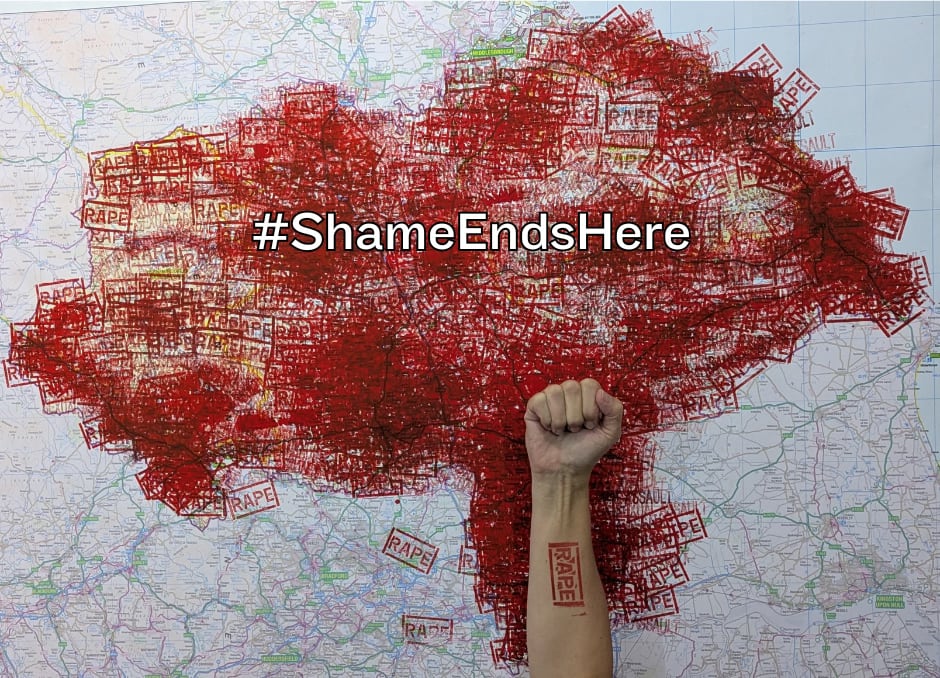
If you are anywhere near York (UK) on the 1 Feb, don’t miss this. Shame Ends Here is an ambitious art-and-film project by Yorkshire-based art collective Make Your Mark that brings cold police statistics into uncomfortable proximity with lived experience, using personal testimony to show the real scale and impact of sexual violence.
Led by the artist Lucy Churchill, a long-time reader and supporter of this newsletter, the project is as much about listening as it is about visibility, honouring survivors, supporting services like SURVIVE, and opening up space for genuine community dialogue. It knowingly builds on the legacy of Suzanne Lacy’s seminal work Three Weeks in May (1977), reminding us that art, when it’s properly engaged with the world, can still be a force for real change.
Three exhibitions I’d like to see
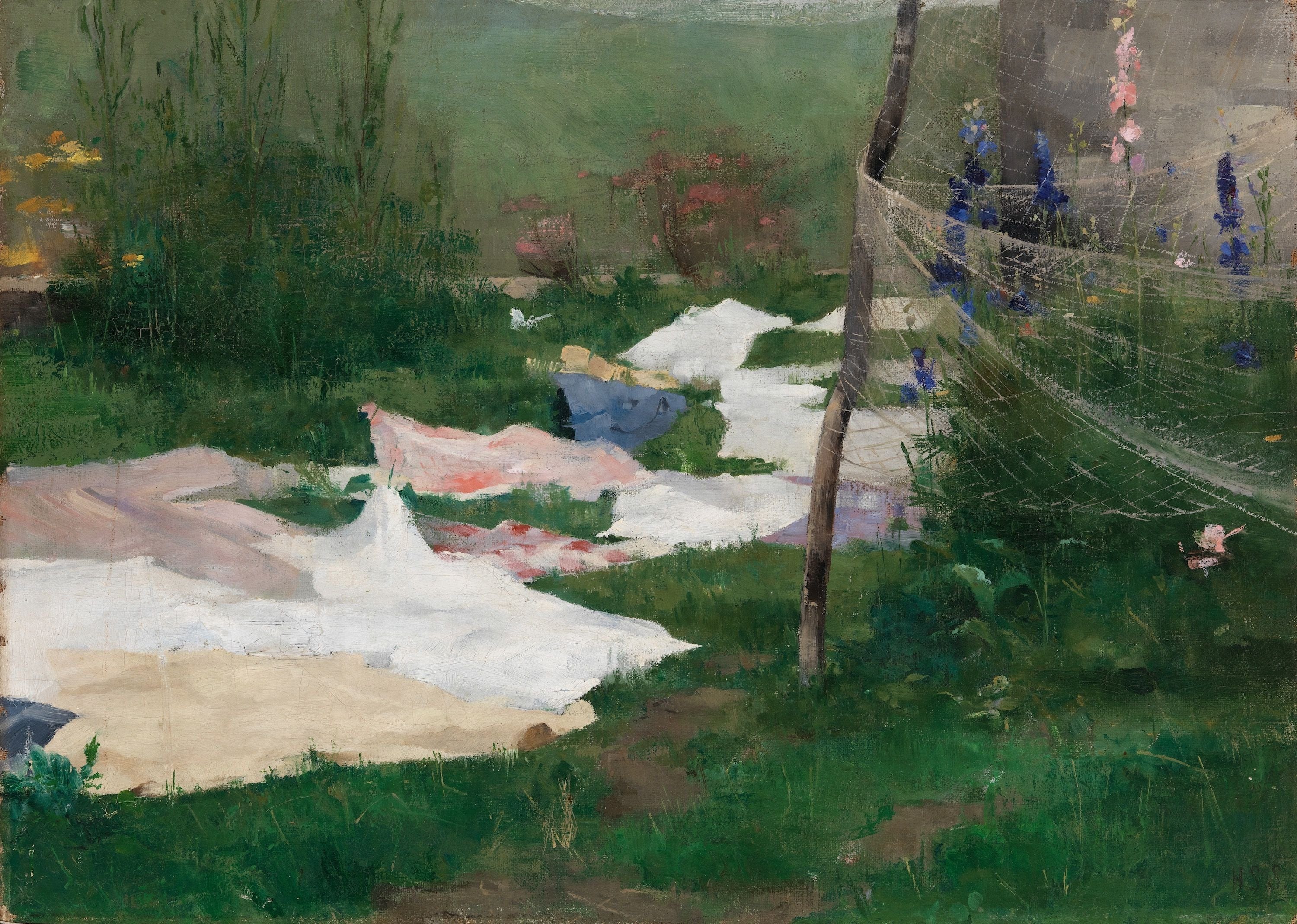
Seeing Silence: The Paintings of Helene Schjerfbeck, The Met Museum, New York, until 5 April 2026. Beloved across the Nordic world but oddly under-sung elsewhere, 19th-century Finnish painter Helene Schjerfbeck was a quietly radical modernist who, working largely in isolation and against the odds, forged a stripped-back, emotionally charged painting language all her own. Unmissable.
Takesada Matsutani: Shifting Boundaries, Hauser & Wirth, London, 5 Feb to 18 April 2026. A key figure of Japan’s Gutai art movement, Matsutani moved to Paris in 1966 and, now 89, remains one of its last surviving members, still working daily in the studio with a relentless energy that carries from his historic experiments through to his new canvases. He asks some big questions on originality, authenticity and who decides what is good and bad art. I wrote about him back in early 2023:

William Nicholson, Pallant House Gallery, Chichester (UK), until 10 May 2026. An individualist through and through, Nicholson hated the idea of being pigeonholed. In declining the invitation to be considered for election to the Royal Academy in the 1920s, he wrote ‘The idea of a label of any sort scares away from me all desire to paint.’ Here’s a good review of the exhibition discussing some absolutely lush images. The prospect of seeing this show makes my mouth water.
That’s all for today, GC readers.
Let me know your thoughts! And please help me spread the word about this newsletter by clicking like or restack. Or better still, share it with someone you think will enjoy it.
Thanks for reading!
This really lands for me. I don’t want *less* context, I want better context, especially for artists and stories that haven’t historically been seen or taken seriously. That framing can be crucial. But when interpretation starts doing all the thinking for us, it flattens the work instead of opening it up. Some of the art I love most lives in contradiction, ambiguity, and tension. I miss being trusted to look, sit with discomfort, and make meaning myself instead of being handed the takeaway upfront.
Also I loved learning about Marlow Moss - thank you!
You articulate with real elegance something many artists recognise instinctively, even if it remains baffling to everyone else. That gap was one of the reasons I started my Substack. I wanted to open up a conversation about what artists actually do and think, and, in a small way, to reclaim a discussion about what art is uniquely capable of. It seems to me that much of the confusion comes from a distrust of art’s mystery, and a corresponding urge to instrumentalise it: to make it political in order to grant it an obvious social function.